
Education Under Fire: How Wars in Ukraine, Russia, Iran, and Across Africa Are Reshaping the Future of Students And How They Can Stay Safe
War does not only redraw borders. It redraws childhood. It interrupts dreams mid-sentence. It turns classrooms into shelters and school routes into risk zones.
Across Ukraine, Russia, Iran, and multiple conflict-affected regions across Africa, armed conflict and political instability are severely disrupting education systems. The consequences are; immediate school closures, displacement, infrastructure destruction and long-term: generational learning loss, psychological trauma, and economic stagnation.
This is not a temporary crisis. It is a structural threat to global development.
The Direct Impact of War on Education
1. Destruction of Infrastructure
In conflict zones, schools are frequently damaged or repurposed. Bombings, artillery fire, and armed occupation convert classrooms into military targets or displacement shelters.
Since 2022, thousands of educational facilities in Ukraine have been reported damaged or destroye, a pattern consistent with what the UNESCO has documented globally in its monitoring of attacks on education. Across parts of Africa affected by insurgencies and civil unrest, schools have similarly been burned, occupied, or forced to shut down for prolonged periods.
When physical learning spaces disappear, structured education collapses.
2. Displacement and Interrupted Learning
War creates refugees and internally displaced persons (IDPs), and education is often the first casualty of forced migration.
The UNHCR reports that millions of school-aged children worldwide are displaced due to conflict, with many unable to access formal education in host communities. Displacement often results in:
- Loss of academic records
- Language barriers in host countries
- Overcrowded temporary classrooms
- Interrupted curriculum continuity
In several African regions affected by extremist violence and communal conflict, entire communities have been uprooted, leaving already fragile education systems overwhelmed.
Without structured intervention, temporary disruption becomes permanent dropout.
3. The Digital Divide and Inequality
While online learning became widespread during the COVID-19 pandemic, conflict zones frequently lack stable electricity, secure internet access, and digital infrastructure.
According to emergency education frameworks from UNICEF, children in conflict settings face compounded barriers: unreliable power supply, device scarcity, internet shutdowns, and financial hardship that forces families to prioritize survival over schooling.
The result is an expanding inequality gap, where the most vulnerable students fall further behind.
4. Psychological and Emotional Trauma
Exposure to violence profoundly affects cognitive performance and emotional stability.
Humanitarian education reports from UNICEF emphasize that children exposed to conflict are significantly more likely to experience anxiety, depression, post-traumatic stress symptoms, and difficulty concentrating; all of which directly impair academic performance.
Students in war environments are not merely missing classes. They are learning under chronic stress. Without psychosocial support, recovery in learning outcomes becomes significantly more difficult.
Regional Perspectives
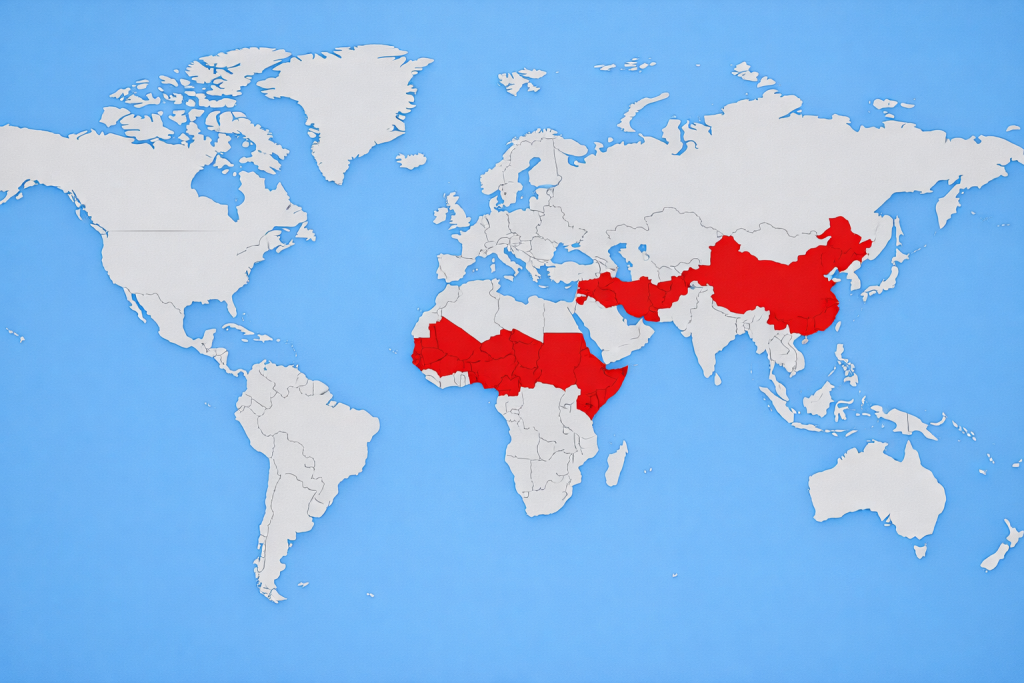
Ukraine and Russia
The war between Ukraine and Russia has disrupted millions of learners. In Ukraine, students frequently shift between in-person, remote, and underground learning environments due to security alerts. UNESCO’s damage assessments have consistently highlighted the scale of educational infrastructure loss.
Meanwhile, geopolitical tensions and international sanctions have reshaped higher education dynamics in Russia, limiting academic exchanges, research collaboration, and global partnerships.
Education systems in both contexts are operating under strain, though in different ways.
Iran
The ongoing crisis in Iran which is causing political unrest and geopolitical pressures have influenced university operations and student safety concerns across the country and border nations. Periods of civil tension can result in campus closures, internet restrictions, and uncertainty around academic continuity.
Such instability directly affects students’ ability to plan, complete coursework, and engage in academic discourse safely.
Africa
Across parts of Sub-Saharan Africa and the Sahel, insurgency and communal violence have led to widespread school closures. In some regions, armed groups have specifically targeted schools as symbols of Western education.
UNICEF and UNESCO reporting shows that girls in conflict-affected African regions are disproportionately affected, facing higher risks of early marriage, exploitation, and permanent dropout.
When schools close for extended periods, re-enrollment rates decline sharply.
The Global Ripple Effect
The consequences of conflict-driven learning loss extend far beyond national borders.
The World Bank, through its Human Capital Index and global education analyses, has warned that prolonged learning disruptions reduce lifetime earnings potential and weaken national GDP growth. When education systems collapse, economic productivity declines.
Human capital is the backbone of development. War erodes it.
Reduced educational attainment today translates into lower economic resilience tomorrow.
How Students Can Stay Safe During Conflict
While students cannot control geopolitical events, they can take structured measures to improve safety and educational continuity.
1. Prioritize Situational Awareness
- Monitor verified emergency alerts
- Register with institutional safety systems
- Identify evacuation routes and safe zones
- Avoid large gatherings during unrest
Preparedness reduces risk exposure.
2. Maintain Secure Academic Documentation
UNHCR guidance for displaced learners highlights the importance of safeguarding academic records.
Students should:
- Digitally back up transcripts and certificates
- Store copies in secure cloud platforms
- Keep emergency contact lists
- Maintain identification documents securely
Continuity often depends on documentation access.
3. Strengthen Remote Learning Capacity
UNESCO’s education-in-emergencies framework emphasizes adaptable delivery systems.
Where possible:
- Download course materials for offline use
- Enroll in accredited online programs
- Maintain structured self-study schedules
- Participate in virtual academic communities
Resilience in education requires flexibility.
4. Protect Mental Health
UNICEF’s psychosocial support recommendations stress the importance of emotional stability in maintaining learning outcomes.
Students should:
- Seek peer and family support
- Access counseling services when available
- Maintain structured routines
- Limit exposure to distressing media cycles
Mental resilience supports academic resilience.
5. Explore Humanitarian Education Pathways
The UNHCR and global education partners provide refugee scholarship programs, cross-border university access frameworks, and temporary certification pathways for displaced students.
Students affected by conflict should explore:
- Refugee scholarship schemes
- International university transfer programs
- Accredited remote certification options
Education continuity is possible, but it requires proactive engagement.
Education as a Peace Strategy
Education is not only a victim of war. It is one of the most powerful tools to prevent its recurrence.
Research synthesized in World Bank development reports consistently shows that inclusive education systems:
- Increase economic opportunity
- Reduce susceptibility to extremist recruitment
- Strengthen civic participation
- Promote social cohesion
Rebuilding schools is not symbolic. It is strategic.
A Defining Question for Our Generation
Will conflict define the future of education or will education redefine the future after conflict?
Students studying in shelters in Ukraine. Learners in displaced communities across Africa. Young Iranians navigating instability. Russian students adapting to geopolitical shifts. Their resilience is undeniable; But resilience alone is insufficient. Protection of education requires coordinated global commitment; from governments, international agencies, civil society, and local communities. Education is not merely curriculum delivery. It is stability. It is dignity. It is long-term peace infrastructure.
In times of war, protecting education is not optional, It is essential.